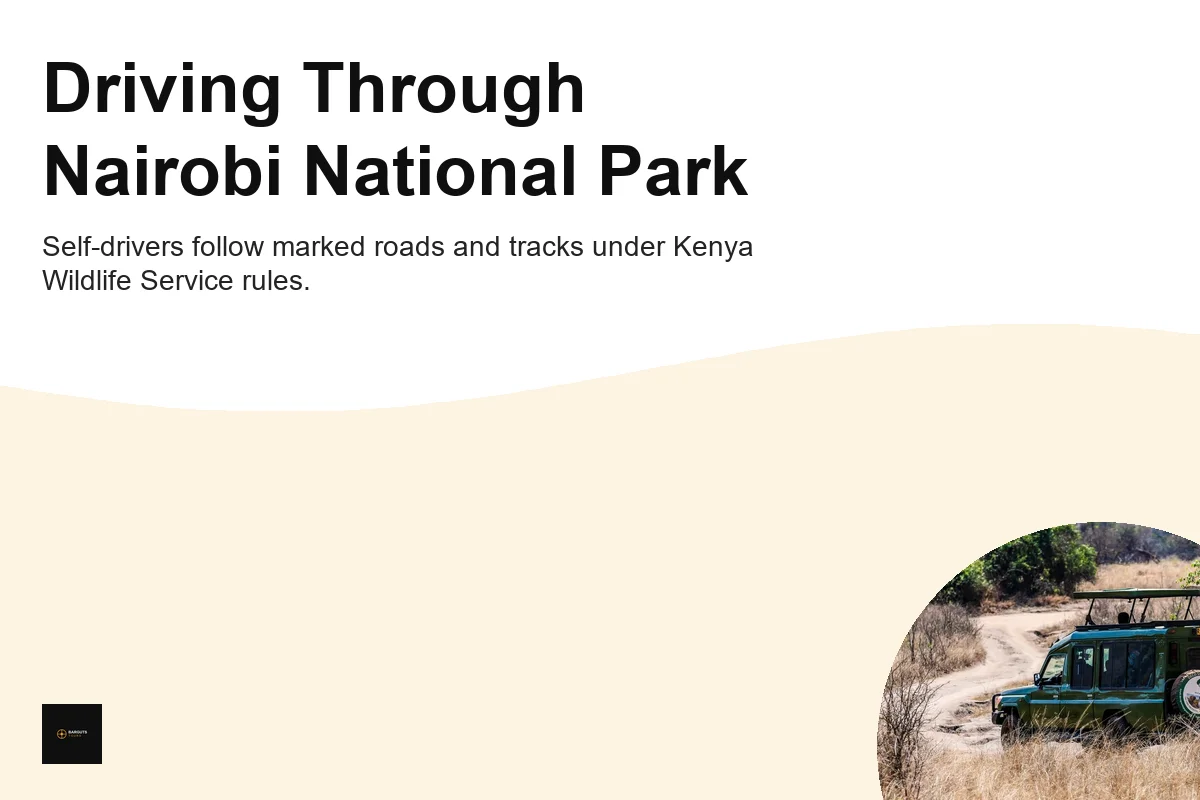
Yes, you can drive through Nairobi National Park in your own or a hired car, on marked roads and tracks under Kenya Wildlife Service rules. A high-clearance SUV or 4×4 handles the tracks best, although a saloon manages the main tracks in the dry season. Before the gate, you need an eCitizen permit, ID, the vehicle registration, fuel, and an offline map, and a loop across the open plains suits a first visit. A stuck car stays put while you call KWS, and a hired driver suits first-time visitors who want help spotting wildlife.
Is Self-Driving Allowed Inside the Park?
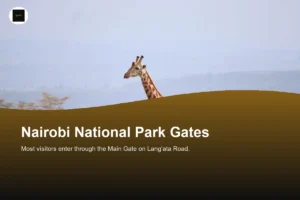
Yes, self-driving is allowed on the park’s marked roads and tracks in your own or a hired car. Kenya Wildlife Service (KWS) manages the park and sets the rules every driver follows. Most visitors arrive through the Main Gate on Lang’ata Road, about 8 km from the Central Business District (Kenya Wildlife Service, 2026).
You do not need a ranger in the car for a self-drive visit. That sets Nairobi National Park apart from the Maasai Mara, where self-drivers now travel with a ranger. Vehicle options for the trip sit on Nairobi National Park car hire.
Which Rules Apply to Private Vehicles?
The 5 rules that apply to private vehicles are a 40 km/h limit, established roads only, staying inside with doors closed, no feeding or hooting, and leaving before the 6pm close:
A 40 km/h speed limit, with penalties for speeding.
Established roads and trails only, because off-road driving is strictly prohibited.
Staying inside the vehicle with the doors closed, except in designated areas.
No feeding animals and no hooting, plus a minimum viewing distance of 20 metres.
Leaving before the gates close at 6:00 PM, unless you stay overnight.
KWS publishes these rules on the Nairobi National Park page (Kenya Wildlife Service, 2026). Single-use plastic is also banned, so pack water in reusable bottles.
What Happens If You Break a Rule?
Breaking a rule leads to penalties from KWS, and speeding in particular attracts fines. Rangers patrol the main circuits and stop vehicles that leave the established roads. Driving under the influence of alcohol is strictly prohibited (Kenya Wildlife Service, 2026).
KWS also states that visitors enter the park at their own risk. Following the rules protects both the wildlife and the people in your car.
Which Vehicle Handles the Tracks Best?
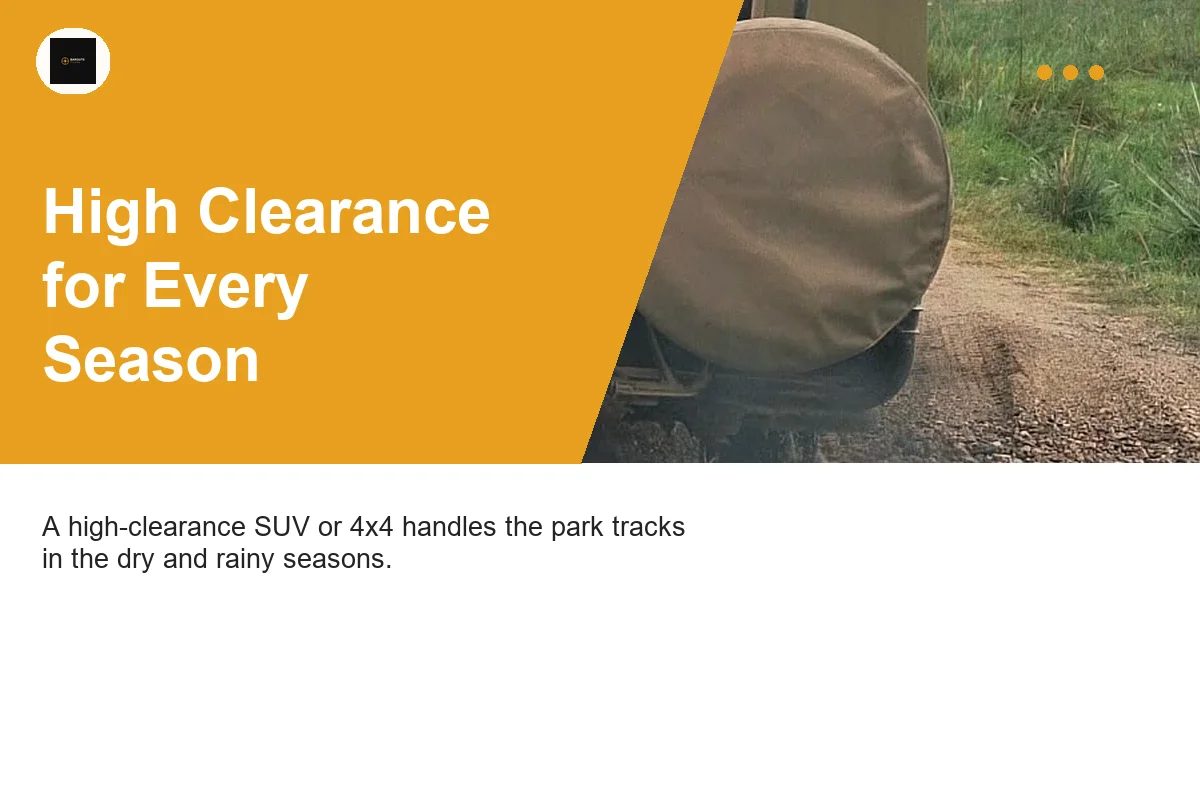
The vehicle that handles the tracks best is a high-clearance SUV or 4×4, while a saloon manages the main tracks in the dry season. The park’s roads are mostly gravel and murram. Rain turns low sections soft and slippery.
A high-clearance SUV or 4×4 handles the park tracks in the dry and rainy seasons.
The table below compares the main vehicle types for a self-drive visit by season and best use.
Vehicle type
Dry season
Rainy season
Best for
Saloon (Toyota Axio, Premio)
Main tracks only
Not recommended
Short, budget visits in dry weather
Crossover SUV (Toyota RAV4, Nissan X-Trail)
Most tracks
Main tracks with care
Couples and small families
Body-on-frame 4×4 (Toyota Prado)
All open tracks
All open tracks
Full-day circuits in any season
Pop-up-roof safari 4×4 (Land Cruiser)
All open tracks
All open tracks
Groups who want standing views
Kenya’s long rains run from March to May, and the short rains from October to December (Kenya Meteorological Department, 2025). Crossover options sit on SUV hire in Nairobi, and the off-road range sits on 4×4 car hire in Nairobi.
A pop-up roof lets passengers stand and photograph without opening doors. Groups that want that view book Land Cruiser safari van hire.
Does Rain Change Road Conditions Inside?
Yes, rain turns low-lying sections soft enough to bog down a low car. Black cotton soil holds water after a heavy storm. A saloon that manages the plains in August struggles on the same road in April.
Check the weather the night before, if you plan to self-drive in a rainy month. Choose a high-clearance vehicle for any visit between March and May.
What Do You Need Before Reaching the Gate?
The 5 things you need before reaching the gate are an eCitizen permit, your ID or passport, the vehicle registration, fuel, and an offline map:
An eCitizen permit, bought online in advance because the gates are cashless.
Your ID or passport, matching the name on the permit.
The vehicle registration number, which goes on the booking.
A full tank of fuel, filled in the city before you enter.
An offline map, because junction signs are sparse and signal drops in places.
Rangers check the permit, the passenger count, and the vehicle registration at the barrier. A prepared car clears the gate in a few minutes.
What Belongs in the Bag for a Full Day?
The 6 items that belong in the bag for a full day are drinking water, snacks, binoculars, a camera, sunscreen with insect repellent, and sunglasses:
Drinking water in reusable bottles, because single-use plastic is banned.
Snacks for the stretches between picnic sites.
Binoculars for animals far from the road.
A camera with a charged battery and spare storage.
Sunscreen and insect repellent for open windows and picnic stops.
Sunglasses for the glare off the plains.
KWS lists the same essentials in its visitor tips (Kenya Wildlife Service, 2026). Pack the bag the night before an early start.
Need a Car in Nairobi?
Self-drive & chauffeur hire available today — same-day quote in minutes.
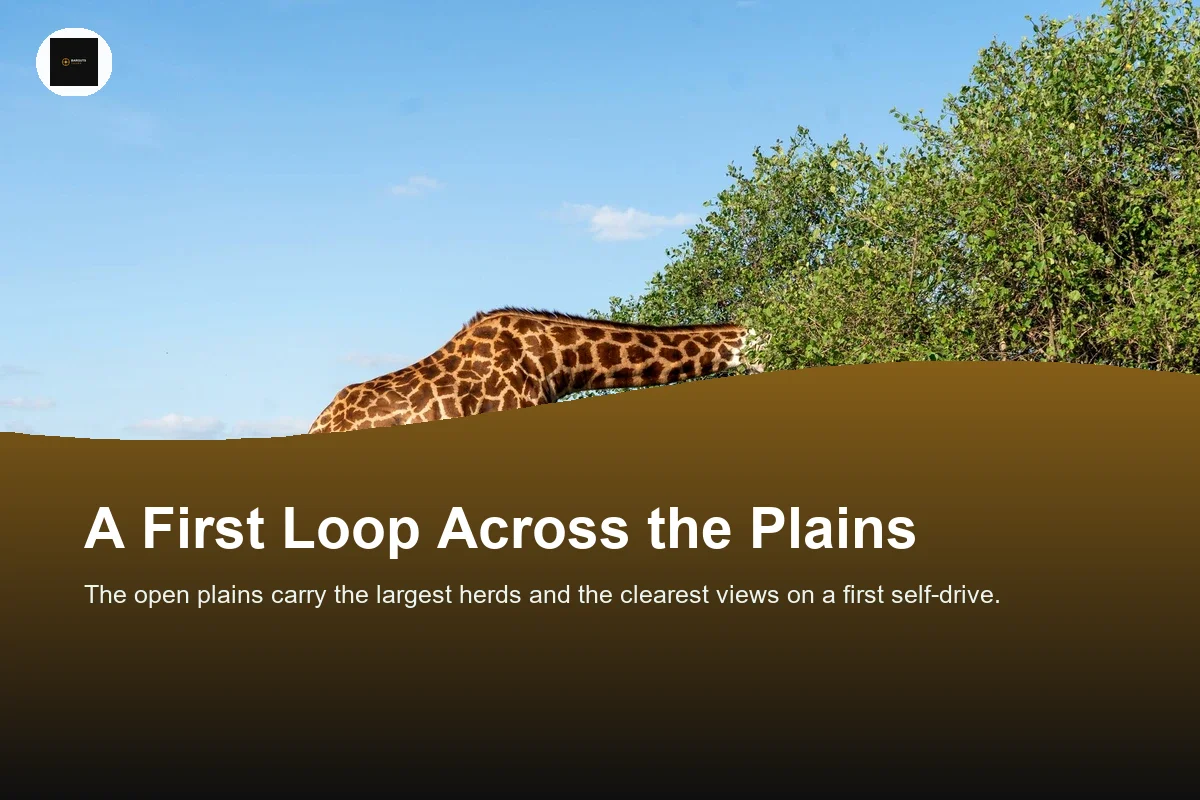
The circuit that suits a first self-drive is a loop from the Main Gate across the open plains, with Hippo Pools as the turnaround. The plains carry the largest herds and the clearest views. The skyline sits behind the grassland for much of the drive.
The open plains carry the largest herds and the clearest views on a first self-drive.
Hippo Pools lies on the Athi River in the south of the park, where hippos and crocodiles share the water. A designated area there lets you step out under KWS rules. Allow 3 to 4 hours for the loop at the 40 km/h limit, plus stops.
Check the route on the KWS park map before you leave. A downloaded offline map keeps you on the right track at unsigned junctions.
Which Animals Do Drivers See Most Often?
The animals drivers see most often are giraffe, zebra, buffalo, and antelope on the open plains, with lion and black rhino sighted less often. The park holds more than 100 animal species and four of the Big Five, with elephants the one absentee (Kenya Wildlife Service, 2026). Three lion prides live in the park: Kingfisher, Athi, and Mokoyet.
A rhino sanctuary protects black rhino, a species once heavily poached across Kenya. Scan the thickets slowly, because rhino often stand still in the shade.
What Happens If the Car Gets Stuck or Breaks Down?
A stuck or broken-down car stays where it is while you call KWS and the hire company from inside the vehicle. The stay-inside rule still applies when a car stops moving. Lions, buffalo, and rhino live across the park.
Is Hiring a Driver Better for First-Time Visitors?
Yes, hiring a driver is better when you want someone who knows the circuits and spots wildlife for you. A local driver knows where lions and rhino were seen that morning. Everyone in the car watches the park instead of the track.
Self-driving gives you freedom over pace and stops at a lower cost. A driver suits first visits, short layovers, and groups with young children.
A driver also handles the gate formalities and the route back through city traffic. That leaves you free to rest after an early start or a long flight. Options sit on car hire with driver in Nairobi and driver for hire in Nairobi.
No, you stay inside the vehicle at sightings, except in designated areas such as picnic sites and Hippo Pools. Keep the doors closed while animals are near.
Is a Ranger Required for Self-Drive Visitors?
No, a ranger is not required for a self-drive visit to Nairobi National Park. Follow the KWS rules and any ranger instructions at the gate.
Does Google Maps Work on the Tracks?
Yes, Google Maps works best with an offline map downloaded before entry. Signal and junction signs are patchy in parts of the park.
Are Pets Allowed on a Visit?
No, pets are not allowed in the park. Leave pets at home or with your accommodation.
Can You Fly a Drone on a Visit?
No, a drone needs written permission from KWS before any flight. Apply to KWS well before your visit.
Barguts Tours — Nairobi
Looking for a Reliable Vehicle in Nairobi?
NTSA-licensed, fully insured hire — self-drive, chauffeur, airport transfer, or safari. Same-day confirmation, seven days a week.