
Distance
Drive time
Vehicle needed
per day
The drive from Nairobi to Meru covers approximately 220 km via the A2 Thika Road and B6 highway through Embu and Chuka, taking 4–5 hours on fully paved roads through the eastern foothills of Mount Kenya. Meru is the commercial centre of Meru County at 1,500m elevation — an agricultural region famous for Meru tea, miraa (khat), and the Nyambene Hills. Meru National Park, one of Kenya’s most remote and wildlife-rich reserves, lies 90 km further east of Meru town and requires a 4WD for access. The highway drive itself is excellent — winding through coffee and tea country on the flanks of Mount Kenya’s eastern slopes.
Key Takeaways
- Distance: ~220 km via A2 (Thika Road) then B6 through Embu and Chuka to Meru.
- Drive time: 4–5 hours including one rest stop at Embu or Chuka.
- Road type: fully paved A2 and B6 — no off-road sections required to reach Meru town.
- Vehicle: any saloon, estate, or SUV for Meru town; Toyota Prado (4WD) for Meru National Park (90 km east of town).
- Highlights en route: Mount Kenya eastern slopes views, Embu highlands scenery, Tana River upper tributaries, continuous tea and coffee cultivation.
- Meru National Park: 350 km from Nairobi, 90 km east of Meru town — a full-day extension requiring overnight stay.
- Best season: January–March and June–October — dry seasons for the best road conditions and Meru NP game viewing.
The Route: Nairobi to Meru
| Town / Landmark | Distance from Nairobi | Notes |
|---|---|---|
| Thika town | ~45 km | Dual carriageway ends; fuel; food; Chania Falls viewpoint (5-min detour via Blue Post Hotel); B6 junction toward Embu starts here |
| Makuyu / Kenol | ~75 km | Small town junction; sugar cane country; road begins climbing into the Mount Kenya foothills |
| Embu town | ~130 km | County capital of Embu County; fuel, food; recommended lunch stop; B6 continues north to Chuka and Meru |
| Chuka | ~175 km | Market town; miraa (khat) growing zone; road climbs with Mount Kenya’s eastern profile increasingly visible |
| Meru town | ~220 km | Journey end; commercial centre of Meru County; Meru Museum; gateway to Nyambene Hills and Meru NP |
The B6 from Embu to Meru passes through some of Kenya’s most productive agricultural landscape — coffee, tea, miraa, and foodcrops grown on the well-watered eastern slopes of Mount Kenya at elevations of 1,200–1,700m. The road narrows through Chuka town but is paved throughout. Mount Kenya’s snow-capped peaks are visible on clear mornings from the ridges above Chuka and from the approach road into Meru.
Vehicle Options for Nairobi to Meru
| Vehicle Type | Nairobi–Meru Highway | Meru Town Activities | Meru National Park |
|---|---|---|---|
| Economy saloon (Axio, Vitz) | Good — fully paved | Good | Unsuitable |
| Compact SUV (RAV4) | Good | Good | Dry season main circuit possible — not recommended |
| Toyota Prado (4WD) | Good | Good | Recommended — all circuits and water crossings |
For a Meru town trip only, an economy saloon is adequate and the most cost-efficient choice. For the Meru National Park extension, a Toyota Prado or Land Cruiser is the minimum — the park’s Tana River circuits and black cotton soil areas become impassable for 2WD vehicles in any season.
Fuel Planning: Nairobi to Meru
| Vehicle | Consumption (highway) | Round Trip (440 km) | Estimated Fuel Cost |
|---|---|---|---|
| Economy saloon (1.3L petrol) | ~9L/100km | ~40 litres | KES 7,840 |
| Mid SUV (2.0L petrol) | ~12L/100km | ~53 litres | KES 10,388 |
| Toyota Prado (3.0L diesel) | ~12L/100km | ~53 litres | KES 9,805 |
Fuel stops: fill in Nairobi. Thika (45 km) has multiple stations. Embu (130 km) is the best mid-route fuel stop — Shell and Total stations in town. Meru town has full fuel infrastructure. If extending to Meru National Park, fill completely in Meru town — no fuel is available inside the park or in the approach towns east of Meru.
What to Do in and Around Meru
- Meru Museum — Meru town centre; the most comprehensive museum of Meru cultural history in Kenya; traditional Meru objects, ethnographic collections, and colonial-era documents; open daily; small admission fee
- Nyambene Hills — 20 km northeast of Meru; Kenya’s main miraa (khat) growing region; ridge-top views of the Mount Kenya massif to the south and the semi-arid lowlands to the north; accessible on paved road to Laare then murram toward Kangeta
- Mount Kenya National Park — Chogoria Gate — 50 km south of Meru via Chuka; one of Mount Kenya’s most scenic trekking routes (Chogoria Route) reaching the summit via Lake Ellis and Nithi Falls; KWS entry; trekking permits and guides required
- Meru National Park — 90 km east of Meru town (350 km from Nairobi); one of Kenya’s least visited but most wildlife-rich parks; the conservation site where Joy and George Adamson rehabilitated Elsa the lioness (Born Free); Tana River flows through the park; Big Five; reticulated giraffe; hirola antelope; 4WD required for all circuits; non-resident entry USD 60/adult
- Kinna Coffee Cooperative — near Imenti, 15 km south of Meru; a working highland coffee cooperative accepting visitors during processing season (October–January); Mount Kenya arabica coffee at source pricing
- Tharaka Nithi County border — south of Meru; access to Tana River upper gorge areas; scenic highland-to-lowland transition landscape
Meru National Park: Is It Worth the Extension?
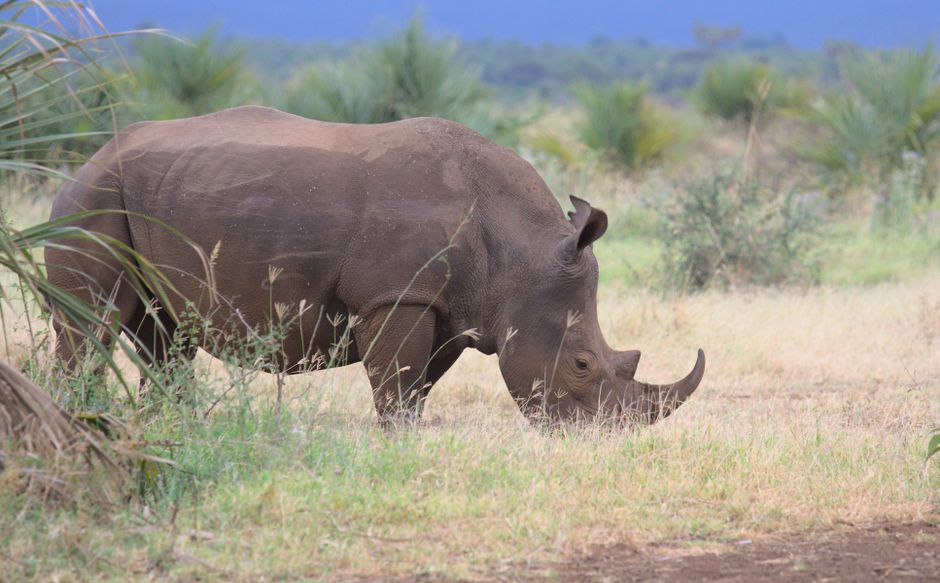
Meru National Park (90 km east of Meru town, 350 km total from Nairobi) is one of Kenya’s most underrated wildlife destinations — rarely visited compared to Masai Mara or Amboseli, it offers genuine wilderness character and high density wildlife on the Tana River. The park is famous as the setting of Joy Adamson’s Born Free (the rehabilitation of Elsa the lioness). It holds Big Five including lion, leopard, elephant, buffalo, and both black and white rhinos.
The extension from Meru town adds one additional night (minimum) to the trip — arriving at Meru NP in the afternoon for a 3-hour afternoon drive, spending the night at Elsa’s Kopje or Leopard Rock Lodge, and a full morning drive before returning to Nairobi. Total Nairobi–Meru NP trip: minimum 2 nights, maximum efficiency 3 nights. A 4WD is non-negotiable for Meru NP — the Tana River crossings require it.
Location
Frequently Asked Questions
How long is the drive from Nairobi to Meru?
4–5 hours via the A2 Thika Road then B6 through Embu and Chuka to Meru — approximately 220 km on fully paved roads. Departing before 07:00 avoids Nairobi city traffic and allows arrival in Meru by 12:00–13:00.
What is the best route from Nairobi to Meru?
A2 Thika Road to Thika (45 km), then B6 through Makuyu, Embu, and Chuka to Meru (175 km). The entire route is paved. An alternative via Nanyuki (A2 north) adds approximately 120 km but passes through the Laikipia Plateau — practical only when combining Nanyuki as a stop.
Do I need a 4WD to drive from Nairobi to Meru town?
No — the A2 and B6 are fully paved. Any saloon, estate, or SUV handles the route to Meru town. A 4WD is required only for Meru National Park (90 km east of town) and for access to some Nyambene Hills murram tracks.
Is Meru National Park worth visiting from Nairobi?
Meru National Park is one of Kenya’s finest wildlife destinations for visitors who want minimal tourist crowds — it sees a fraction of Masai Mara’s visitor numbers while holding comparable wildlife diversity. The Born Free historical connection (Joy and George Adamson, Elsa the lioness) adds cultural depth. The minimum practical trip from Nairobi is 2 nights. A 4WD is mandatory. Non-resident park entry is USD 60/adult per day.
Related Guides
- Nairobi to Nanyuki car hire & driving guide
- Weekend getaways from Nairobi: 10 self-drive destinations
- Best car for a Kenya safari
- Top 10 road trips from Nairobi
- Fuel prices in Kenya: How to budget for a road trip
Barguts Tours provides saloons and SUVs for the Nairobi–Meru highway route, and Prado 4WD vehicles for Meru National Park extensions. Contact Barguts Tours at carhirenairobi.co.ke or call +254 707 116 220 to book your Meru vehicle.
Sources:
- Kenya Wildlife Service — kws.go.ke
- Kenya National Highways Authority — kenha.go.ke
- Kenya Tourism Board — magicalkenya.com