The Nairobi National Park car entry fee is KES 600 a day for fewer than 6 seats and KES 1,500 a day for 6 to 12 seats under the 2025 KWS fee schedule. The vehicle charge sits on top of each passenger’s visitor ticket, and you pay both online before arrival because the gates are cashless. A hired car pays the same rate as a private car with the same number of seats. KWS raised its fees in October 2025 to close a conservation funding gap, so confirm the current rate on KWSPay before you travel.
What Are the Rates by Seat Count?
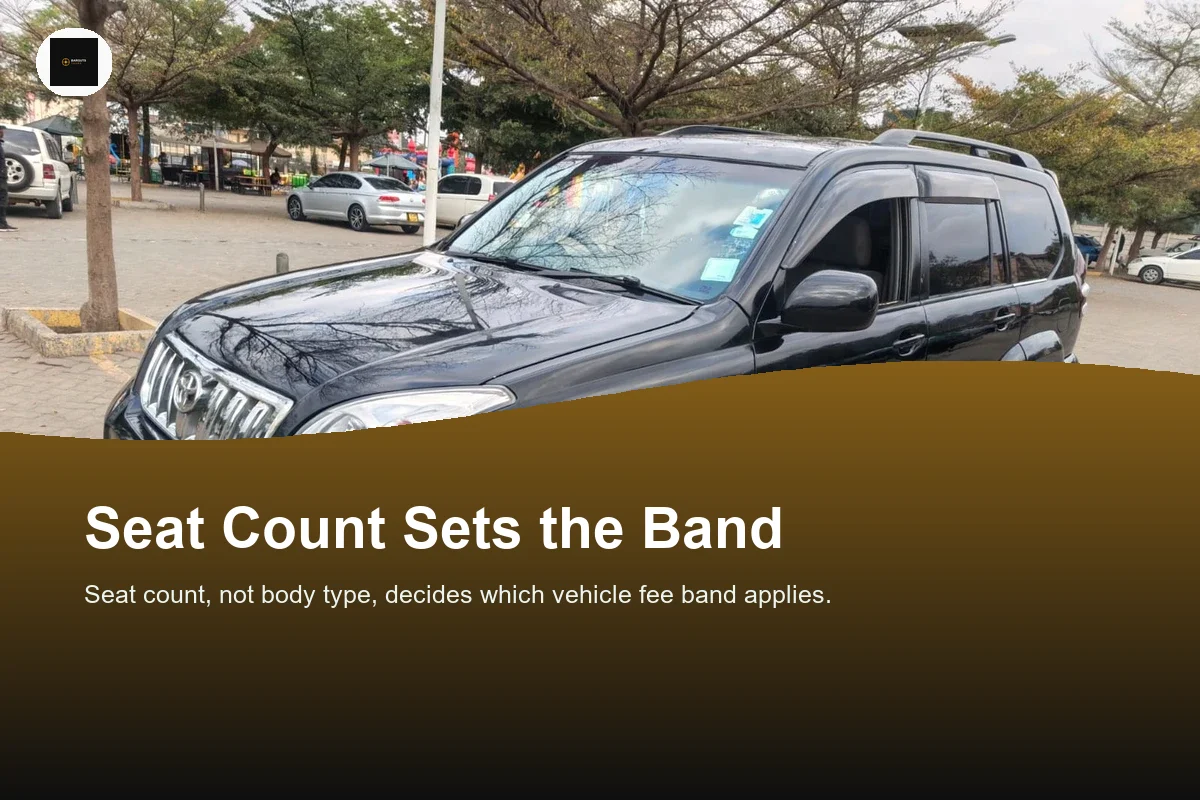
The 2 private vehicle rates are KES 600 a day for fewer than 6 seats and KES 1,500 a day for 6 to 12 seats. These rates come from the Wildlife Conservation and Management (Fees) Regulations, Legal Notice No. 160 of 2025 (Kenya Wildlife Service, 2025). Seat count, not body type, decides the band.
Is the Vehicle Charge Separate From Visitor Tickets?
Yes, the vehicle charge is added on top of each passenger’s visitor fee. KWS lists adult visitor fees of KES 1,000 for East African citizens, KES 1,350 for Kenya residents, and USD 80 for non-residents (Kenya Wildlife Service, 2026). Children pay half the adult rate in each group.
A family of four citizens in a 5-seat car pays four visitor tickets plus one vehicle fee. The full visitor table belongs in a separate guide to entry fees by residency.
How Do You Pay Before Arrival?
To pay before arrival, you add the vehicle to your KWS eCitizen booking and pay online, because the gates are cashless. The booking asks for the vehicle registration and the seat category. Rangers match both at the barrier.
Pay the day before your visit to avoid signal problems at the gate. Keep the confirmation on your phone and as a screenshot.
Does a Hired Car Pay a Different Rate?
No, a hired car pays the same daily rate as a private car with the same number of seats. A 5-seat SUV and a 7-seat Prado therefore fall into different bands. Check the seat count of the exact hired vehicle before you book the permit.
KWS raised prices in October 2025 because new fee regulations took effect to close a conservation funding gap. KWS reported revenue of KES 7.92 billion in 2024/25 against KES 19.79 billion required (Kenya Wildlife Service, 2025). The new schedule took effect on 1 October 2025.
The Kenya Tourism Federation challenged the rollout in the High Court in October 2025. KWS’s park page lists the 2025 visitor rates in October 2026, so confirm the vehicle rate on KWSPay on the day you book.