No, Nairobi National Park is not a zoo, because wild animals roam freely and find their own food across open plains. An electric fence runs along the north, east, and west, while the south stays open to the Kitengela plains. The open south matters because wildebeest and zebra migrate between the park and the Athi-Kapiti plains. The key difference between the park and the Animal Orphanage is captivity, and visiting is ethical when you follow KWS rules, because entry fees fund conservation.
Why Is the Park Not a Zoo?
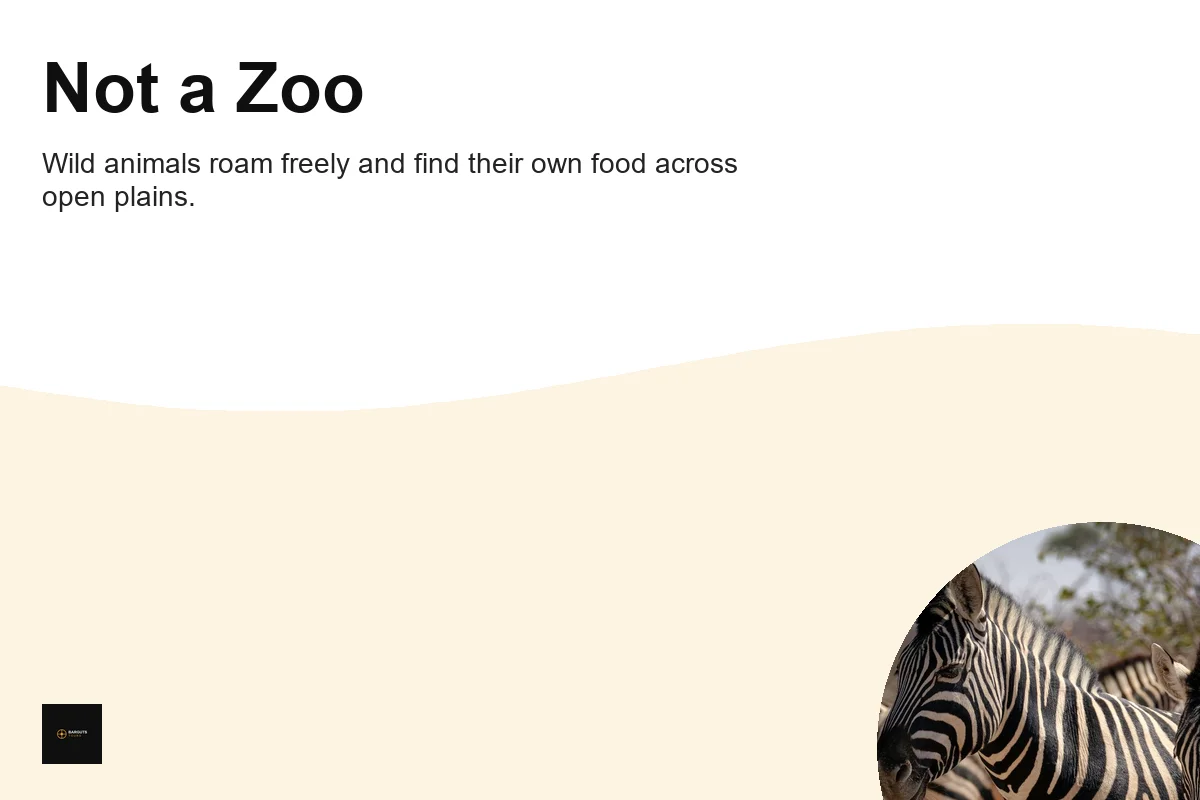
The park is not a zoo because wild animals roam freely and find their own food across open plains. Lions hunt their own prey, and herds graze where the grass grows best.
KWS prohibits feeding wildlife, because feeding disrupts natural diets and creates dependence on people (Kenya Wildlife Service, 2026). The park’s 117 square kilometres are covered in how big Nairobi National Park is.
Which Sides Have Fences?
The sides with fences are the north, east, and west, while the south stays open to the Kitengela plains. Nature Kenya describes an electric fence separating the park from the city on those 3 sides.
The fence keeps animals off city roads and out of homes. The southern boundary follows the Mbagathi River, with no fence, so animals cross freely in both directions.
Why Does the Open South Matter?
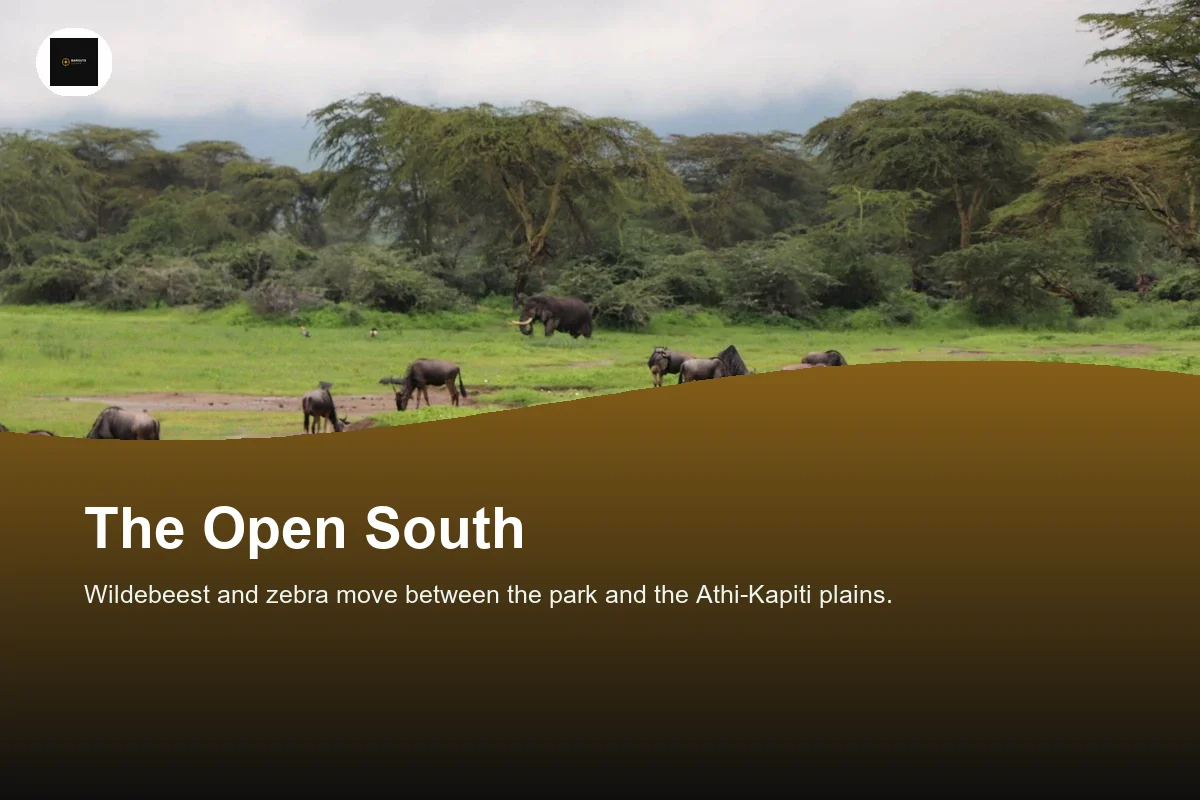
The open south matters because wildebeest and zebra migrate between the park and the Athi-Kapiti plains. The park and the southern plains form one ecological unit (Key Biodiversity Areas, 2015).
Wildebeest and zebra move between the park and the Athi-Kapiti plains.
Research led by the International Livestock Research Institute found that fencing on private land south of the park increasingly blocks these movements (Said et al., 2016). Fewer open routes mean fewer animals reach the park in the dry season.
What Separates the Orphanage From the Wild Areas?
The key difference between the orphanage and the wild areas is captivity: orphanage animals live in enclosures for care, while park animals roam free. The Animal Orphanage sits beside the Main Gate and cares for injured, orphaned, and confiscated animals.
Visitors who want to see both pay for a separate ticket or a combined package. The Orphanage and the neighbouring attractions sit in attractions next to Nairobi National Park.
Need a Car in Nairobi?
Self-drive & chauffeur hire available today — same-day quote in minutes.
Yes, visiting is ethical when you follow KWS rules, because entry fees fund conservation. KWS describes every safari as a contribution to wildlife conservation (Kenya Wildlife Service, 2026).
You keep the visit ethical by staying 20 metres from wildlife, staying on marked roads, and never feeding animals. Guided safari vehicles sit on safari car hire in Nairobi.