The safest rental cars in Kenya are higher-clearance SUVs with working ABS, airbags on every seat row, and a documented service history. The newest car on a fleet page is not automatically the safest. Kenya’s roads change from smooth Nairobi tarmac to corrugated murram within one journey, so a vehicle must suit the surface you will drive on. This guide explains the features that matter, the checks to make before you accept a car, and the model classes that suit each route.
The safest rental cars combine higher ground clearance, working ABS, airbags, and a documented service history.
What Makes a Rental Car Safe on Kenya’s Roads?
Rental car safety in Kenya depends on three things: passive safety features such as airbags, active systems such as ABS and stability control, and suitability for the road surface. Each matters on a different part of a trip.
A saloon that handles the CBD well can struggle on a murram road to a national park. Road suitability is the factor most visitors underestimate.
The four vehicle characteristics that determine rental car safety on Kenyan roads are:
Ground clearance suited to your route, so the underside does not strike ruts or rocks on rough roads.
ABS and stability control, which help the car stop and steer on loose surfaces.
Airbags at the front and sides, and working seatbelts on every seat.
Tyres with enough tread for the distance and surface you will cover.
Check all four before you accept a vehicle.
Are SUVs Safer Than Sedans in Nairobi City Traffic?
The key difference between an SUV and a sedan in Nairobi traffic is driver sightline and impact height. An SUV sits higher, so you see further over matatus and motorcycles. Its structure also meets other vehicles at a higher point than a sedan does.
An SUV is not automatically safer. Its higher centre of gravity makes it less stable on sharp corners at speed, especially with low tyre pressure. Drive it with the same caution you would use in any vehicle.
Which Safety Features Matter Most for Upcountry Travel in Kenya?
The 3 safety features that matter most for upcountry travel in Kenya are ground clearance, ABS that works on loose surfaces, and suspension with enough travel. Road surfaces change within a single journey, and a feature that works well on tarmac can perform differently on corrugated gravel.
The 3 most important features for upcountry driving are:
Ground clearance: keeps the underside clear of ridges and buried rock on routes such as the Narok approach to the Maasai Mara.
ABS: helps prevent the wheels locking when you brake on gravel or clay, especially on downhill sections.
Suspension travel: absorbs corrugations so the car stays on its line on rough roads to Nanyuki, Meru, or Kisumu.
Vehicles with all three, such as a Prado or a RAV4, are better suited to mixed tarmac and murram routes. Confirm the specification for the exact vehicle you will hire.
Which Car Models Are the Safest to Hire in Kenya?
The safest models for mixed Kenyan routes are higher-clearance SUVs and 4x4s, including the Toyota Prado TX and Toyota RAV4 in the Barguts fleet. Model year, trim, and market specification all affect a vehicle’s safety equipment, so check the specification of the car you will actually receive.
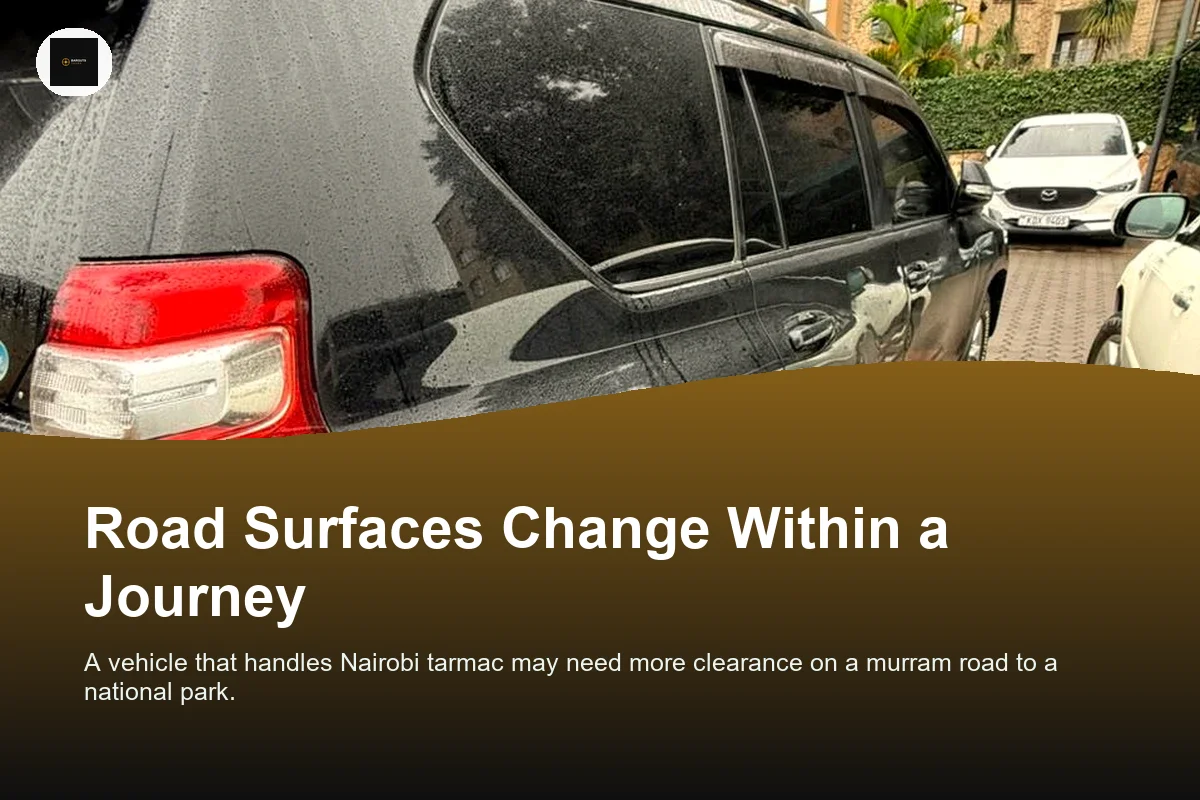
A vehicle that handles Nairobi tarmac may need more clearance on a murram road to a national park.
Is the Toyota Prado Safer Than the RAV4 for Off-Road Hire in Kenya?
The key difference between the Toyota Prado and the RAV4 for off-road hire is ground clearance and body construction. The Prado is built for sustained rough-road driving. The RAV4 handles tarmac well and suits occasional unpaved sections.
For extended trips to the Maasai Mara, Amboseli, or Tsavo, a Prado is the stronger choice. For tarmac routes with a few unpaved sections, a RAV4 is adequate. Safety equipment depends on the specification of each vehicle, so confirm it at booking.
What Safety Features Should Land Cruiser Models Offer for Safari Hire?
Land Cruiser and Prado models often include stability and traction aids designed for loose and steep terrain. The exact systems vary by model and year, so check the specification sheet for the specific vehicle before you rely on any of them.
Ask the hire company which systems the vehicle has, and whether each one works. Do not rely on a system you have not been shown.
What Safety Features Should You Check Before Accepting a Rental Car in Kenya?
To check a rental car’s safety before you accept it, work through six physical checks before you sign. Most companies expect this. A company that resists is signalling a problem you should identify before you leave.
Need a Car in Nairobi?
Self-drive & chauffeur hire available today — same-day quote in minutes.
The 6 safety checks to complete before signing the rental agreement are:
Airbag warning light: turn the ignition to the accessory position and confirm the airbag light comes on and then goes off. A light that stays on means a fault.
ABS: at walking pace in a car park, press the brake firmly. A pulsing sensation through the pedal confirms ABS is working.
Tyre tread: check the wear indicators, or use a tread-depth gauge, on all four tyres and the spare. Tread that is level with the indicators is worn out.
Seatbelts: pull and latch each seatbelt in every row. Confirm the latch clicks and the belt locks under a sharp tug.
Body damage: photograph all panels, the bonnet, and the roof with timestamps before you leave. This protects you against claims for damage that was already there.
Service record: ask to see the last two service entries and the mileage at each. A long gap between services on a high-mileage vehicle is a maintenance warning.
Do Rental Cars in Kenya Have Airbags and ABS as Standard?
Not every rental car has airbags and ABS, so do not assume they do. Check the year of manufacture when you book, then confirm the airbags and ABS are present and working when you collect the car. A spec sheet alone does not prove a feature works.
What Tyre Tread Depth Is Safe for a Long Road Trip in Kenya?
For a long road trip, treat 3 mm of tread as a sensible minimum. Wet braking distance grows as tread wears down, and murram wears tyres faster than tarmac. Check the tread at pickup and again on any long leg. If the tread is level with the wear indicators, ask for a different tyre or a different car before you leave.
What Is the Safest Rental Car for Family Travel in Kenya?
The safest rental car for a family in Kenya is a vehicle with a full set of airbags, working seatbelts or child seat anchorages in every row, and enough ground clearance for the route. Family trips often include national park roads, where surfaces are least predictable.
At walking pace in a car park, a firm brake press should confirm ABS is working.
Confirm three things at booking. Ask how many seats the vehicle has, because a seven-seat option depends on the model and trim. Ask whether child seat anchorages are fitted. Ask whether a child seat can be supplied, and whether the hire company allows it.
Driving with children on rough roads calls for slower speeds and more rest stops. Plan the day around the road conditions, not only the distance.
Which Rental Cars Perform Best for Night Driving on Kenyan Highways?
For night driving on Kenyan highways, a vehicle with good headlight coverage and stability control gives you the most margin. Headlight reach matters because stopping distance grows fast at highway speed, and roads can have unlit hazards such as animals, potholes, and parked vehicles without lights.
Night driving carries more risk than daytime driving on most Kenyan routes. Avoid it where you can, especially on rural stretches and outside towns. If you must drive after dark, reduce speed, keep a larger following distance, and plan rest stops along the route.
How Does a Rental Car’s Maintenance History Affect Your Safety in Kenya?
A rental car’s maintenance history directly affects its braking, steering, and suspension, and no safety feature can make up for a neglected service record. Brakes and suspension wear with use, and wear reduces the performance that the safety features rely on.
Ask for the service record before you accept any car. A documented schedule is the best evidence the vehicle has been kept in good order. For the reliability comparison, read most reliable rental cars in Kenya.
Frequently Asked Questions About Safe Car Hire in Kenya
The questions below cover the safety checks visitors ask about most often.
Are Airbags Standard in Every Kenyan Rental Car?
No. Check the year of manufacture and the specification for the vehicle you will hire. Then confirm the airbags are present and working on collection.
Which Rental Car Is Safest for Off-Road Travel?
A high-clearance 4×4, such as a Toyota Prado TX, suits off-road travel best in the Barguts fleet. Confirm the specification and condition of the specific vehicle before you rely on it.
What Should I Do If a Safety Warning Light Comes On During My Hire?
Stop in a safe place, check the warning, and call the hire company’s emergency line. Do not continue on a long journey with a brake, oil, or engine warning light on.
Sources
Barguts Tours daily rates and vehicle classes, September 2026.
Contact Barguts Tours on WhatsApp to confirm the safety specification and service record of the vehicle you want, before you book.
Barguts Tours — Nairobi
Looking for a Reliable Vehicle in Nairobi?
NTSA-licensed, fully insured hire — self-drive, chauffeur, airport transfer, or safari. Same-day confirmation, seven days a week.