Yes, Nairobi National Park is gazetted, as Kenya’s first national park, on 16 December 1946. Conservationist Mervyn Cowie led the campaign that created the park. The Wildlife Conservation and Management Act, 2013 protects the park today. KWS runs daily management through ranger patrols, entry fees, and the rhino sanctuary, and the service itself began in 1989.
In Which Year Did Gazettement Happen?
Gazettement happened on 16 December 1946, making Nairobi National Park Kenya’s first national park. KWS describes the park as the oldest in Kenya and East Africa (Kenya Wildlife Service, 2026).
At the time, wildlife roamed close to what is now the city centre, and lions were heard near the railway stations. You read about the park’s wild status today in is Nairobi National Park a zoo.
Who Created the Park?
Conservationist Mervyn Cowie led the campaign that created the park. Cowie pressed the colonial government to protect the plains south of Nairobi from hunting and settlement.
The campaign led to the Royal National Parks Ordinance of 1945, the law under which the park was gazetted the following year. KWS credits Cowie as the park’s founder (Kenya Wildlife Service, 2026).
Which Law Gives Protection Today?
The Wildlife Conservation and Management Act, 2013 protects the park today. The Act sets out how national parks are declared, managed, and protected (Kenya Law, 2013).
The Act also sets the offences and penalties for poaching, off-road driving, and other breaches inside protected areas. For you as a visitor, the park rules carry the force of law, so feeding wildlife or leaving the road is an offence.
How Does KWS Run Daily Management?
To run daily management, KWS patrols with rangers, sets entry fees, and protects the rhino sanctuary. The 4 main management roles are:
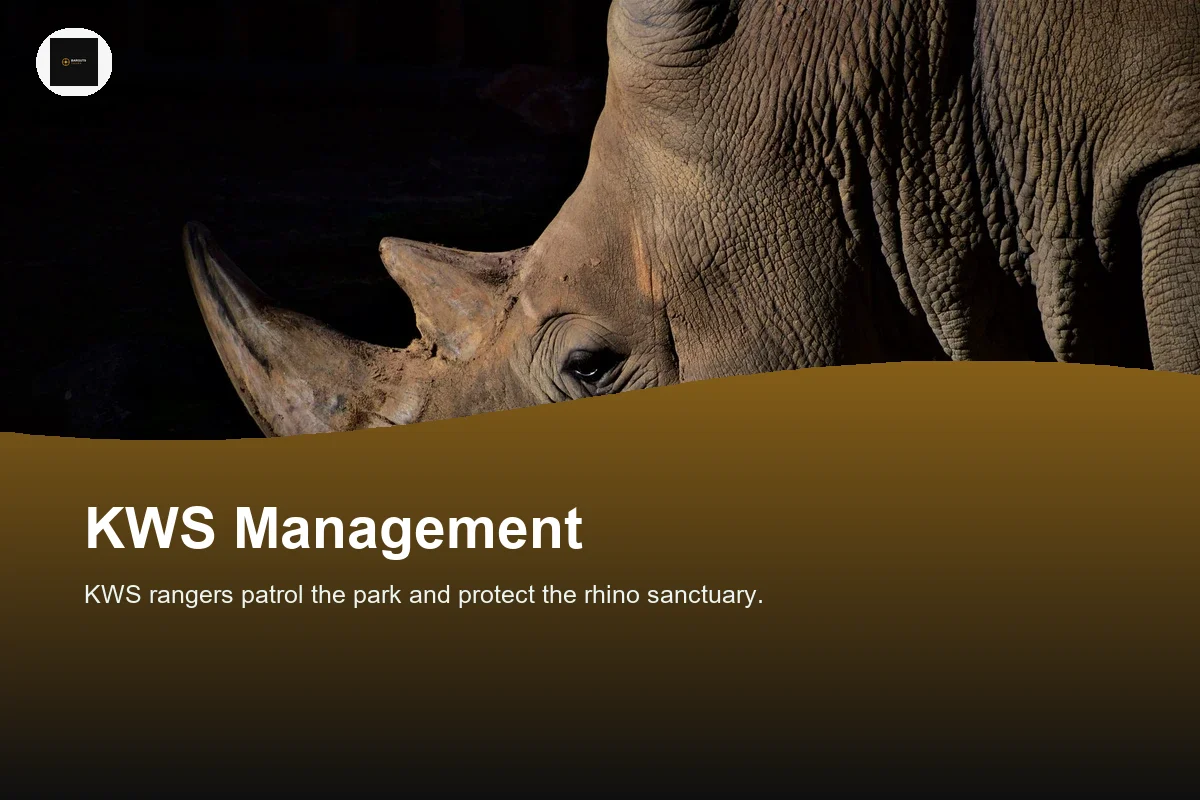
KWS rangers patrol the park and protect the rhino sanctuary.
Patrolling the plains and boundaries with armed rangers.
Setting and collecting entry, vehicle, and activity fees.
Protecting the black rhino in the sanctuary from poaching.
Staffing the gates and enforcing the park rules.
Fees collected at the park pay for patrols and conservation work. Current rates sit in Nairobi National Park entry fees. When you visit by car, rangers at the gate check your ticket and vehicle, and park-ready vehicles sit on Nairobi National Park car hire.
Need a Car in Nairobi?
Self-drive & chauffeur hire available today — same-day quote in minutes.
KWS began in 1989, under the Wildlife (Conservation and Management) (Amendment) Act. Some sources date the service to 1990, when operations started.
KWS replaced the earlier Wildlife Conservation and Management Department. Richard Leakey led the service through the first years.
Which Facts Set Nairobi’s Wildlife Capital Apart?
The facts that set Nairobi’s wildlife capital apart are the park’s age, size, and place inside a capital city. The key facts sit in what Nairobi National Park is.
Frequently Asked Questions
Is This Kenya’s Oldest National Park?
Yes, KWS describes Nairobi National Park as the oldest in Kenya and East Africa. The park dates to 1946.
Did Lions Once Roam Near the City Centre?
Yes, lions were once heard near Nairobi’s railway stations, according to KWS. The city has since grown up to the northern boundary.
Does Nairobi County Have a Role?
Yes, the land lies within Nairobi County, while KWS manages the park nationally. National parks fall under national, not county, government.
Did the 1946 Founding Influence Kenya’s Other Protected Areas?
Yes, the founding influenced the creation of other Kenyan parks and reserves, according to KWS. Tsavo National Park followed in 1948.
Does the Same Service Protect Other Reserves?
Yes, KWS manages national parks and reserves across Kenya. Some reserves, such as the Maasai Mara, are run by county governments instead.
Barguts Tours — Nairobi
Looking for a Reliable Vehicle in Nairobi?
NTSA-licensed, fully insured hire — self-drive, chauffeur, airport transfer, or safari. Same-day confirmation, seven days a week.