Nairobi National Park covers 117 km², about 28,900 acres, which makes the park small next to parks such as Amboseli and the Maasai Mara. A full loop takes 6 to 8 hours at the 40 km/h limit with stops. A small footprint holds so much wildlife because the open south links the park to the Kitengela plains, and permanent water draws herds in the dry season. Open grassland, riverine forest, rocky gorges, and upland dry forest make up the 4 main habitats.
How Many Acres Does the Park Cover?
The park covers 117 km², about 28,900 acres (Kenya Wildlife Service, 2026). The same area equals about 11,700 hectares or 45 square miles.
To compare the size, you set 117 km² against much larger parks such as Amboseli and the Maasai Mara. Nairobi National Park is roughly a thirteenth the size of the Mara.
The table below lists each protected area by size in square kilometres and acres.
Protected area
Area (km²)
Area (acres, approx.)
Nairobi National Park
117
28,900
Lake Nakuru National Park
About 188
46,500
Amboseli National Park
About 392
96,900
Maasai Mara National Reserve
About 1,510
373,100
The small size keeps the whole park within a day’s drive of the city. Larger parks need two or more days.
How Long Does a Full Loop Take?
A full loop takes 6 to 8 hours at the 40 km/h limit with stops. The limit, wildlife stops, and murram surfaces keep average speeds well below the limit.
A half-day drive covers the northern plains and the dams. Visitors who drive themselves set their own route, and rental terms sit on self drive car hire in Nairobi.
Why Does a Small Footprint Hold So Much Wildlife?
A small footprint holds so much wildlife because the open south links the park to the Kitengela plains, and permanent water draws herds in the dry season. The park and the Kitengela and Athi-Kapiti plains form one ecological unit (Key Biodiversity Areas, 2015).
Herds disperse onto the southern plains in the wet season and return to the park’s dams and river in the dry months. You see the largest numbers inside the park from June to October.
Need a Car in Nairobi?
Self-drive & chauffeur hire available today — same-day quote in minutes.
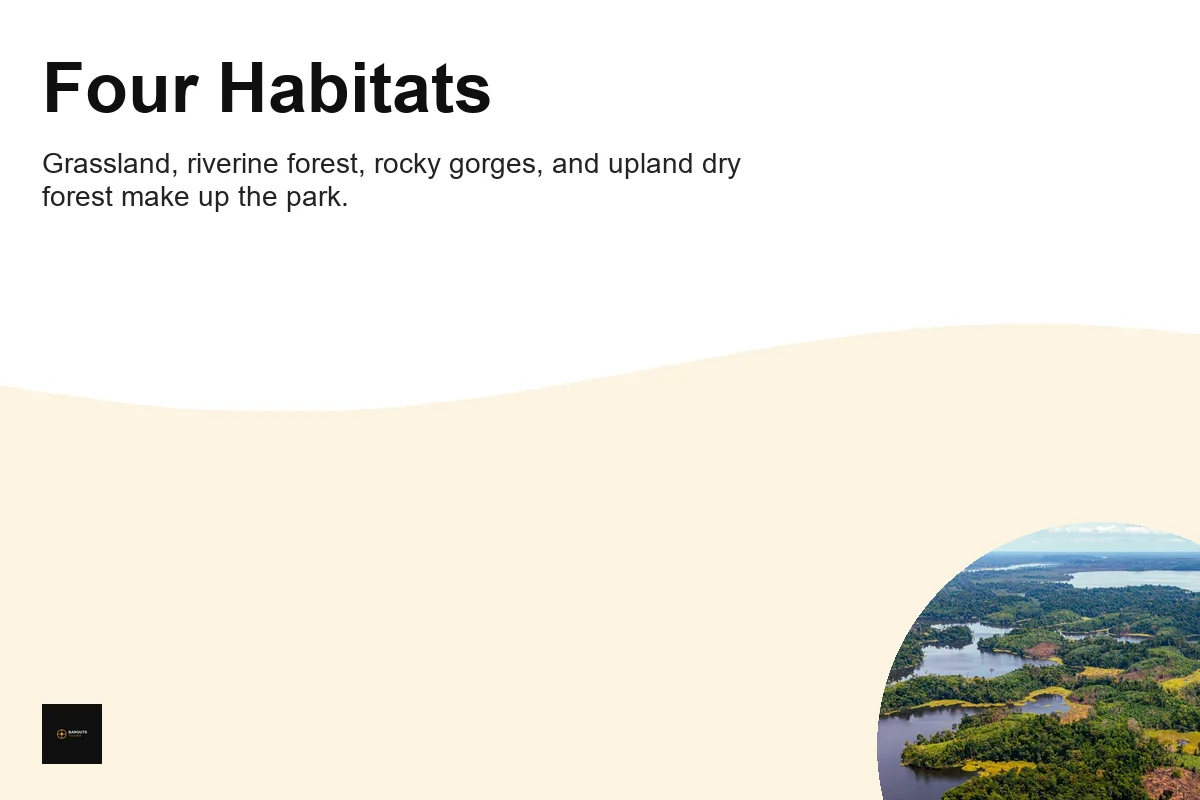
The 4 habitats the park contains are open grassland plains, riverine forest along the rivers, rocky gorges in the south, and upland dry forest in the west:
Grassland, riverine forest, rocky gorges, and upland dry forest make up the park.
Open grassland plains, rolling across most of the park.
Riverine forest and thicket along the Mbagathi and Athi rivers.
Rocky gorges cutting through the southern valleys.
Upland dry forest on the higher western side near the Main Gate.
Each habitat holds a distinct mix of species, from plains game to forest birds. Park-ready vehicles for every route sit on Nairobi National Park car hire.
Is the Boundary Fenced Like a Zoo?
No, the boundary is fenced on three sides but open to the south, so animals roam free. The fencing and the ethics of the park sit in is Nairobi National Park a zoo.
Frequently Asked Questions
Is 117 km² Small by Kenyan Standards?
Yes, 117 km² is small compared with most Kenyan national parks. Tsavo East and Tsavo West each cover thousands of square kilometres.
How Many Hectares Is That?
That is about 11,700 hectares. One square kilometre equals 100 hectares.
How Many Square Miles Is That?
That is about 45 square miles. One square mile equals about 2.59 square kilometres.
Can You Cover Everything in a Half Day?
No, a half day covers the plains, while the southern gorges need a full day. Start at 6:00 AM for a full loop.
Has the Boundary Changed Since 1946?
Yes, land use around the boundary has changed since 1946, most of all on the open southern side. Fencing and settlement now crowd the southern plains.
Barguts Tours — Nairobi
Looking for a Reliable Vehicle in Nairobi?
NTSA-licensed, fully insured hire — self-drive, chauffeur, airport transfer, or safari. Same-day confirmation, seven days a week.