Nairobi is safe for tourists who take the precautions they would use in any large city. Most visitors complete their trips without incident. Risk is concentrated in specific areas, times, and situations, and a visitor who knows where those are can plan around them. This guide covers which neighbourhoods suit visitors, which crimes are most common, how to drive and travel safely, how to handle the airport transfer, and when to use pre-booked transport.
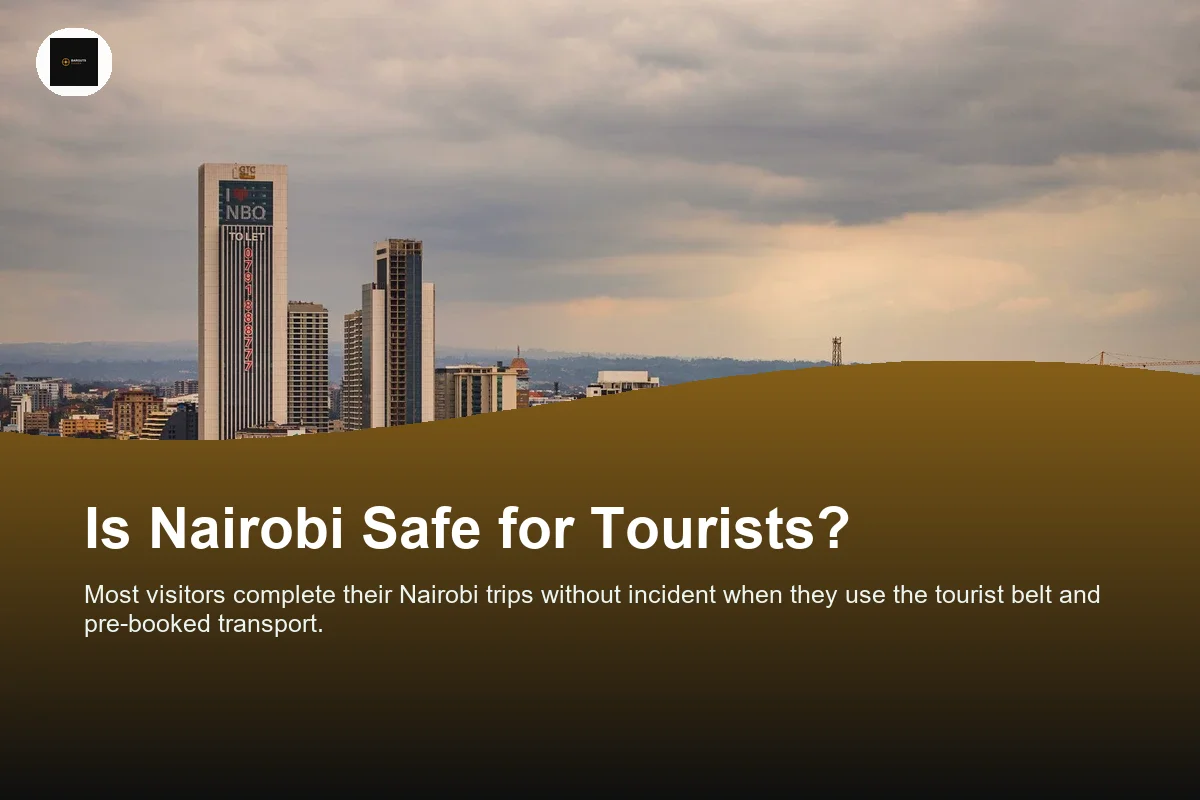
Most visitors complete their Nairobi trips without incident when they use the tourist belt and pre-booked transport.
How Safe Is Nairobi for Tourists in 2026?
Nairobi is safer for tourists than its international reputation suggests, provided they stay in established visitor areas and take standard urban precautions.
Government travel advisories for Kenya, including the UK’s, flag high crime rates across the country. Those advisories cover all of Kenya. They do not measure the risk in the tourist neighbourhoods of Westlands, Karen, Kilimani, and Gigiri, where visitor risk is lower than the city-wide statistics suggest. Check the current advisory for your country before you travel.
Awareness of the specific area matters more than the headline city-wide rate.
Which Areas of Nairobi Are Safe and Which Should Tourists Avoid?
The safest areas of Nairobi for tourists are Westlands, Karen, Kilimani, and the Gigiri diplomatic zone. Each has lower crime rates, better lighting, and a visible security presence compared with other parts of the city.
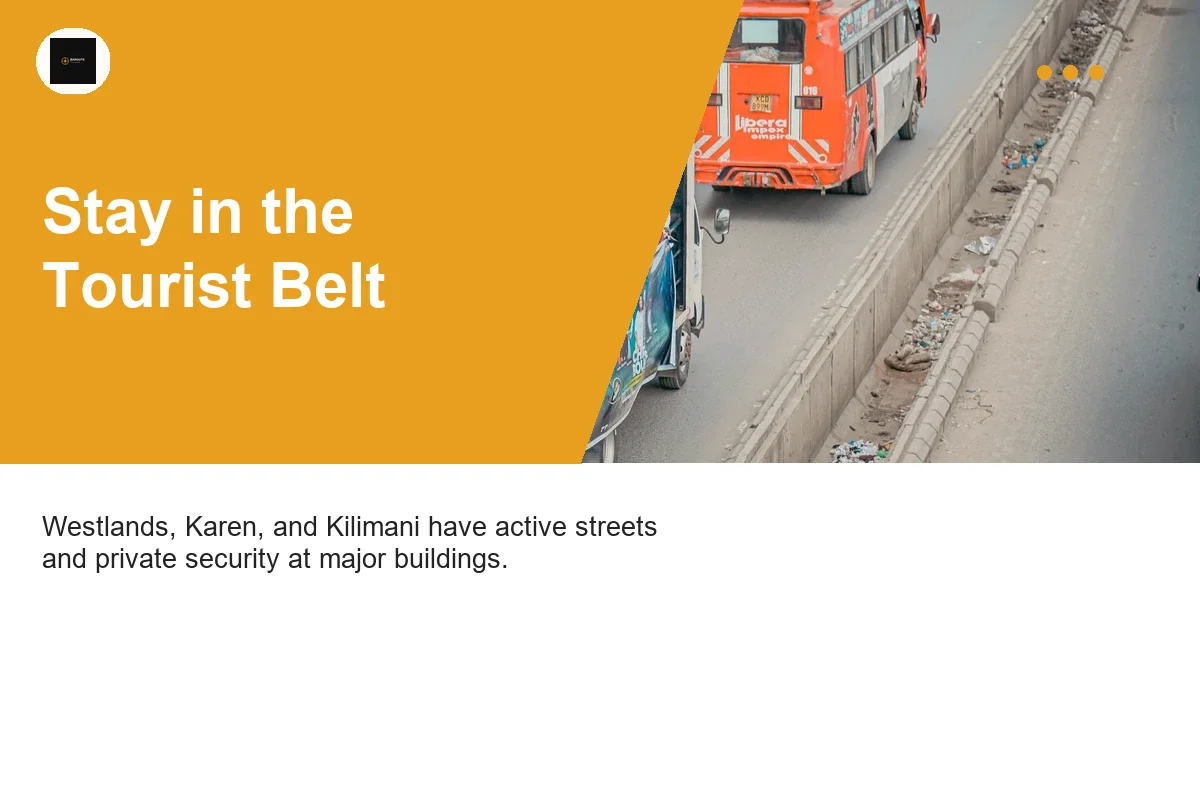
Westlands, Karen, and Kilimani have active streets and private security at major buildings.
Neighbourhood
Safety Level for Tourists
Key Notes for Visitors
Westlands
Generally safe
Restaurant and hotel district with an active evening street life
Karen
Generally safe
Low-density residential suburb, with fewer street-level incidents
Kilimani
Generally safe
Mixed residential and commercial area, popular with international visitors
Gigiri and Runda
Generally safe
Diplomatic and residential zone, with a higher security presence
Nairobi CBD
Take care
Manageable in daylight. Avoid walking on foot after dark
Eastleigh
Check current advice
Higher street-crime risk. Visit only with a trusted local driver during the day
Mathare and Kibera
Check current advice
Informal settlements with limited tourist infrastructure. Visit only on an organised, licensed community tour
Visitors who stay in the tourist belt and use pre-booked transport rarely need to enter higher-risk areas during a trip.
What Makes Westlands, Karen, and Kilimani the Safest Areas for Tourists?
The 3 neighbourhoods safest for tourists, Westlands, Karen, and Kilimani, share four characteristics that make them lower risk than the rest of the city.
The shared safety characteristics of these neighbourhoods are:
Active street life, with restaurants and hotels providing natural surveillance into the evening.
Private security guards at major buildings, malls, and hotel entrances.
Well-lit, tarmacked roads with reliable access to pre-booked vehicles and ride-hailing apps.
Lower population density, which reduces opportunistic crime compared with the CBD.
Visitors who base themselves in one of these neighbourhoods and book airport transfers in advance face lower risk than the city-wide headline figures suggest.
Which Nairobi Areas Carry the Highest Risk and Should Be Avoided?
The areas visitors should approach with the most caution are Eastleigh, Mathare, Kibera, and the CBD east of Moi Avenue after dark. Crime risk is higher there, and security infrastructure is more limited.
The 4 areas with the highest risk for tourists in Nairobi are:
Eastleigh: higher theft and carjacking risk, especially after dark and around the bus terminus.
Mathare and Korogocho: informal settlements with no tourist infrastructure and limited formal security.
Kibera: the large informal settlement, which visitors should only enter on an organised, licensed community tour.
The CBD east of Moi Avenue after 7pm: lower foot traffic, weaker street lighting, and a higher mugging risk for pedestrians.
Avoiding these four areas removes most of the serious risk for visitors. Most Nairobi trips never need them.
What Crimes Do Tourists Most Commonly Face in Nairobi?
The crimes tourists most commonly encounter in Nairobi are opportunistic theft and mugging. These are usually non-violent, and they target visible valuables, such as a phone held openly, an unzipped bag, or jewellery in a busy market.
Most incidents are non-confrontational. They happen in predictable places, such as crowded transport hubs, ATM queues, and market areas. Keeping valuables out of sight removes most of the risk.
Violent crime, including armed robbery and carjacking, does occur in Nairobi. It is concentrated in specific zones and time windows, such as the airport road at night and the CBD on foot late at night. It is not spread evenly across the city or the tourist belt. The UK government advisory classifies mugging, armed robbery, and carjacking as risks in large Kenyan cities.
How Common Is Petty Theft and Pickpocketing in Nairobi’s Tourist Areas?
Petty theft and pickpocketing are the most frequently reported safety issues for tourists in Nairobi. They concentrate in busy public spaces, such as the CBD, market areas, and bus terminals during peak hours.
Remove most of this risk with three habits. Keep your phone in a closed bag, not in your hand or a back pocket in the CBD. Avoid visible jewellery and watches in public. Use ATMs only inside a bank branch or shopping mall, not on the street.
Is Carjacking a Real Risk for Tourists Driving in Nairobi?
Yes, carjacking does occur in Nairobi, and the UK government advisory flags vehicle crime as a significant risk. Visitors who book vehicles from licensed operators and avoid the airport road after dark reduce their exposure considerably.
The highest-risk corridor is the airport road from JKIA into the city, particularly after dark. To reduce the risk, book from a licensed operator with a named driver. Confirm the driver’s name and the vehicle registration before you get in. Drive airport transfers in daylight where you can. Keep the doors locked while the car is stationary at junctions.
Is Driving in Nairobi Safe for Tourists?
Driving in Nairobi is manageable for tourists who plan routes in advance, stay on main arterial roads, and avoid travel after dark.
Pre-book a named driver before you land, and confirm the vehicle registration in advance.
Roads in Westlands, Karen, and Kilimani are in reasonable condition and well signposted. Self-driving is viable with two preparations: an offline map and a pre-planned route. The main adjustment for visitors is the behaviour of minibus taxis, known locally as matatus. They stop suddenly to load passengers, change lanes without signalling, and drive fast between stops. Download an offline map before you leave your accommodation, and plan routes along main roads rather than side streets.
What Road Conditions Should Tourists Know About Before Driving in Nairobi?
The road conditions that most affect tourist drivers in Nairobi are:
Rush-hour congestion on main roads between 7am and 9am and 4pm and 7pm, which can lengthen journeys considerably on routes such as Waiyaki Way and Ngong Road.
Matatu drivers who stop suddenly, cut across lanes, and reverse unexpectedly.
Unmarked speed bumps on residential roads in Karen and Kilimani, which are hard to see at speed.
Potholed secondary roads south and east of the CBD, including routes toward the Industrial Area and Langata.
Poor or absent street lighting on non-arterial roads after dark.
Download an offline map before you leave and plan routes on main roads. That removes most of these risks.
Is It Safe to Drive at Night in Nairobi?
No, driving at night in Nairobi is not recommended for tourists, especially on the airport road, on secondary roads outside the tourist belt, and on any route near the CBD after 8pm.
At night, the risks rise. Carjacking risk on the airport road increases after dark. Street lighting on secondary roads is poor or absent. Few people are on the road after 9pm, so there are fewer witnesses. The practical alternative is to stay in Westlands, Karen, or Kilimani, so you do not need to drive at night. Pre-book every airport transfer with a named driver, and never accept an informal ride on arrival after dark.
Need a Car in Nairobi?
Self-drive & chauffeur hire available today — same-day quote in minutes.
How Safe Is JKIA Airport and the Transfer Route Into the City?
JKIA, Jomo Kenyatta International Airport, is a safe, well-policed international airport. The transfer into the city needs a pre-booked, licensed vehicle. A street taxi or informal driver approaching you in the arrivals hall carries a higher carjacking risk on the airport road.
The terminal follows standard international airport security. Bags are screened on entry, police are present in the arrivals hall, and there is a designated meeting area for pre-arranged drivers. The airport itself carries no unusual risk for arriving visitors.
The airport road is the highest-risk corridor for vehicle crime in Nairobi, particularly at evening and night. To reduce the risk, book a named driver from a licensed operator before you arrive. Confirm the vehicle registration and driver name by phone or WhatsApp before your flight lands. Meet the driver at the designated point in the arrivals hall. Do not accept a lift from anyone who approaches you unprompted in the arrivals area.
What Safety Precautions Should Tourists Take in Nairobi?
To stay safe in Nairobi, tourists should keep valuables concealed, use pre-booked transport for airport and city transfers, and avoid the CBD and secondary roads after dark. These precautions are largely the same as those for any major African city.
The 7 most effective safety precautions for tourists visiting Nairobi are:
Book airport transfers and city transport through a licensed operator before you arrive.
Keep phones, cameras, and wallets inside a closed bag in public areas.
Use ATMs inside hotels, shopping malls, or bank branches, not on street corners.
Avoid walking alone in the CBD after 7pm, and stay within the tourist belt of Westlands, Karen, and Kilimani after dark.
Download an offline map and save your route before leaving your accommodation each day.
Save emergency numbers before you arrive: Kenya Police (999 or 112), your transport operator’s direct line, and your country’s embassy in Nairobi.
Register your trip with your country’s foreign ministry travel registration service before you depart.
Visitors who follow these seven precautions consistently report incident-free trips.
What Is the Safest Way for Tourists to Get Around Nairobi?
The safest way for tourists to get around Nairobi is pre-booked car hire or a chauffeured vehicle. It removes reliance on unvetted street transport and gives you control over the route, the driver, and the departure time.
Westlands, Karen, and Kilimani are well served by licensed car hire and by ride-hailing apps. Both are safer options than street taxis or informal arrangements.
The key decision for most visitors is whether to self-drive or hire a car with a driver. The next section covers that choice. For current car hire options in Nairobi, see car hire in Nairobi.
Is Hiring a Car in Nairobi a Safe Option for Tourists?
Hiring a car in Nairobi is one of the safest transport choices for tourists, provided it is booked through a licensed operator with a physical office and a verifiable track record. Avoid informal arrangements made on arrival.
A licensed operator provides a consistent, identifiable vehicle, a named driver with checkable identity, and a direct contact number throughout the hire. Unvetted street taxis and informal operators cannot offer those three safeguards. Before you leave your accommodation or the airport, confirm the vehicle registration and driver name. That reduces the risk of transfer fraud and vehicle impersonation.
Is It Safer to Hire a Car With a Driver or Self-Drive in Nairobi?
The key difference between hiring a car with a driver and self-driving in Nairobi is local route knowledge. A local driver knows which roads carry more risk at which times of day, which removes one of the main risks for first-time visitors who drive themselves.
Factor
Car With Driver
Self-Drive
Route knowledge
High. The driver avoids higher-risk roads by time of day
Depends on your preparation, offline maps, and route research
Night travel
Driver handles after-dark airport runs and evening transfers
Not recommended, because night driving risk is higher on the airport road
Cost per day
Higher: vehicle hire plus driver fee
Lower: vehicle hire only
Flexibility
Moderate: driver availability can limit last-minute changes
High: you control the schedule and route
Recommended for first-time visitors
Yes, strongly recommended
Yes, with daylight-only driving and full route planning
First-time visitors to Nairobi benefit most from a driver. Returning visitors who know Nairobi road habits can drive safely within the tourist belt. For a driver-led hire, see car hire with a driver in Nairobi.
How Do You Choose a Safe, Reputable Car Hire Company in Nairobi?
To choose a safe car hire company in Nairobi, look for a verified physical address, a named and maintained fleet, and a written rental agreement with clear insurance terms. A WhatsApp number alone is not enough.
The 4 checks that identify a reputable car hire company in Nairobi are:
A registered physical address that you can verify on Google Maps.
A verified Google Business Profile with reviews from several independent travellers, not only testimonials on the operator’s own website.
A written rental agreement, signed before the hire starts, that states the insurance type, excess, deposit terms, mileage policy, and breakdown procedure.
A maintained, identifiable fleet, with branding visible on the vehicle and a direct contact number that stays active for the whole hire.
Run these four checks before you book. They remove most of the risk from informal or unregistered operators. For a comparison of Nairobi operators, see best car hire companies in Nairobi.
Frequently Asked Questions About Tourist Safety in Nairobi
The questions below cover the safety concerns visitors raise most often before they book a trip.
Is Nairobi Safe for Solo Female Travellers?
Yes, Nairobi is safe for solo female travellers who stay in Westlands, Karen, or Kilimani and use pre-booked transport. Solo women can face more verbal harassment than male visitors, particularly in the CBD and on public transport. That risk is lower in the tourist belt and largely removed by pre-booked car hire or a ride-hailing app from your hotel. Book accommodation in one of those three areas, arrange airport and inter-area transfers in advance, and keep the operator’s contact number saved on your phone.
Is Nairobi Safe at Night?
Yes, Nairobi is safe at night for visitors who stay in Westlands, Karen, or Kilimani and use pre-booked transport. These areas have active restaurant scenes, security at venue entrances, and enough street lighting for evening activity. The CBD and secondary roads outside the tourist belt are not safe on foot after dark. Book evening venues within the tourist belt, and arrange your return transport before you go out.
Is Nairobi Safer Than Other Major African Cities?
Nairobi tourist areas, such as Westlands, Karen, and Kilimani, carry a risk profile that is manageable with standard precautions. Risk is concentrated in specific areas and times, and the rest of the city is not uniformly unsafe. Nairobi has a documented terrorism threat, which the next question covers. Compare current advisories for each city you plan to visit rather than relying on general reputations.
What Should You Do If You Are Mugged in Nairobi?
If you are mugged in Nairobi, hand over the valuables, move to a safe place, report the crime to the police, and contact your embassy if your documents were taken. The 4 steps are:
Hand over valuables without resisting. Most muggings escalate to violence only when the victim resists.
Move at once to a safe, populated place, such as a hotel lobby, a mall, or an open business.
Call the Kenya Police on 999 or 112 and report the incident. You will need a police reference number for any travel insurance claim.
Contact your country’s embassy in Nairobi if your passport or travel documents were taken.
Most visitors who do not resist walk away without physical injury. Handing over valuables straight away is the correct response.
Is Terrorism a Risk for Tourists Visiting Nairobi?
Yes, terrorism is a documented risk in Kenya, and the UK, Canadian, and Australian governments all flag it in their travel advice. The practical risk for visitors in central Nairobi and the tourist belt is lower than in border regions near Somalia and on the coast. The documented basis for the threat includes the Westgate Mall attack in 2013 and the DusitD2 hotel attack in 2019. Major hotels and malls in Nairobi now run security as a baseline. That includes vehicle barriers at mall entrances, bag screening at hotel lobbies, and security checks at major entry points. Register with your country’s foreign ministry and follow official travel advice before and during your visit.
Sources
UK Government, Foreign travel advice: Kenya, safety and security. gov.uk/foreign-travel-advice/kenya/safety-and-security. Cited for crime, vehicle crime, and terrorism classifications. Verify against the live advisory before publishing.
Plan a safe visit with a licensed operator. Contact Barguts Tours on WhatsApp to book a named driver or a self-drive hire, and to confirm your airport transfer before you arrive.
Barguts Tours — Nairobi
Looking for a Reliable Vehicle in Nairobi?
NTSA-licensed, fully insured hire — self-drive, chauffeur, airport transfer, or safari. Same-day confirmation, seven days a week.