The Nairobi National Park ivory burning site is a monument inside the park where Kenya publicly destroyed seized ivory. In 1989, President Daniel arap Moi set fire to 12 tonnes of seized ivory at the site. In April 2016, President Uhuru Kenyatta burned 105 tonnes of ivory and 1.35 tonnes of rhino horn in the same park. Kenya burned the ivory because destroying stockpiles shows that ivory has no value outside a living elephant, and you find the monument a short drive inside the Main Gate.
What Is the Monument?
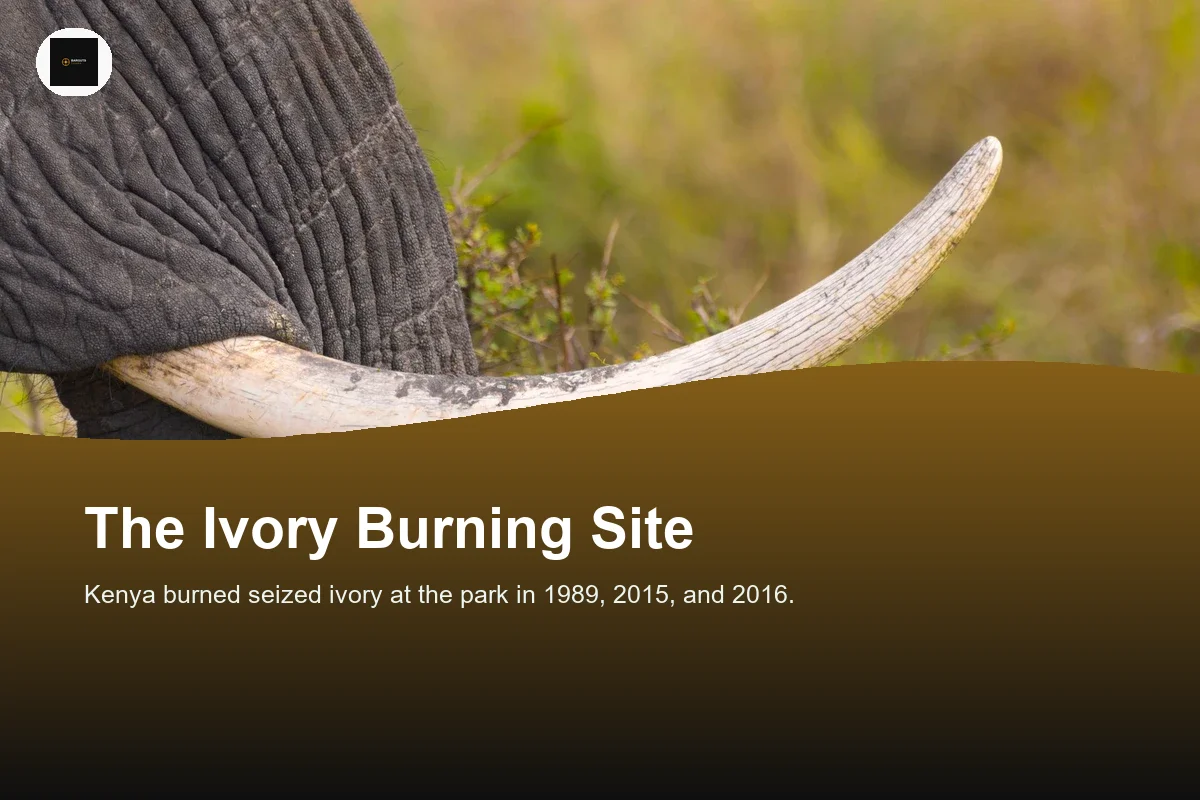
The ivory burning site is a monument inside the park where Kenya publicly destroyed seized ivory. KWS lists the site among the park’s main attractions (Kenya Wildlife Service, 2026).
In 1989, President Daniel arap Moi set fire to 12 tonnes of seized ivory. Richard Leakey, who headed Kenya’s wildlife department at the time, organised the burn. The fire drew world attention to the elephant poaching crisis of the 1980s.
The same year, member countries of CITES voted to ban the international ivory trade (CITES, 1989). The 1989 burn is widely credited with helping turn the tide against poaching.
What Happened in 2016?
In April 2016, President Uhuru Kenyatta burned 105 tonnes of ivory and 1.35 tonnes of rhino horn. Rangers stacked the tusks in towering pyres that burned for several days (National Geographic, 2016).
The 2016 burn was the largest stockpile destruction on record. A smaller burn of 15 tonnes took place at the park on World Wildlife Day in 2015.
Why Did Kenya Burn the Ivory?
Kenya burned the ivory because destroying stockpiles shows that ivory has no value outside a living elephant. A burned stockpile also cannot leak back into the illegal trade.
Burning stockpiles shows that ivory has no value outside a living elephant.
The government chose public burns to signal Kenya’s support for the global trade ban. Critics argued that selling the ivory would fund conservation, but Kenya kept to destruction.
Need a Car in Nairobi?
Self-drive & chauffeur hire available today — same-day quote in minutes.
To find the monument, you enter through the Main Gate on Lang’ata Road and follow the signs a short drive inside. The site sits close to the gate, so you reach the monument within minutes of entering. A stop of 15 to 20 minutes fits at the start or end of a game drive.
Near the Main Gate sit the Nairobi Safari Walk and the Animal Orphanage, with the Giraffe Centre a short drive away. Each one sits in attractions next to Nairobi National Park.
Frequently Asked Questions
Is the Site Free to Visit?
Yes, the site is covered by your park entry ticket. No separate fee applies.
Was Rhino Horn Burned Too?
Yes, rhino horn was burned alongside the ivory in 2016. The pyres held 1.35 tonnes of horn.
Did the Burns Reduce Poaching?
Yes, the 1989 burn is widely credited with helping turn the tide against poaching. The global trade ban followed the same year.
How Much Ivory Was Destroyed?
The three burns at the site destroyed about 132 tonnes of ivory in total: 12 tonnes in 1989, 15 in 2015, and 105 in 2016.
Do Guides Explain the History?
Yes, driver-guides explain the history at the monument. Self-drivers read the plaques on site.
Barguts Tours — Nairobi
Looking for a Reliable Vehicle in Nairobi?
NTSA-licensed, fully insured hire — self-drive, chauffeur, airport transfer, or safari. Same-day confirmation, seven days a week.